
Beyond Copilot: Orchestrating Agentic AI in Production Workflows
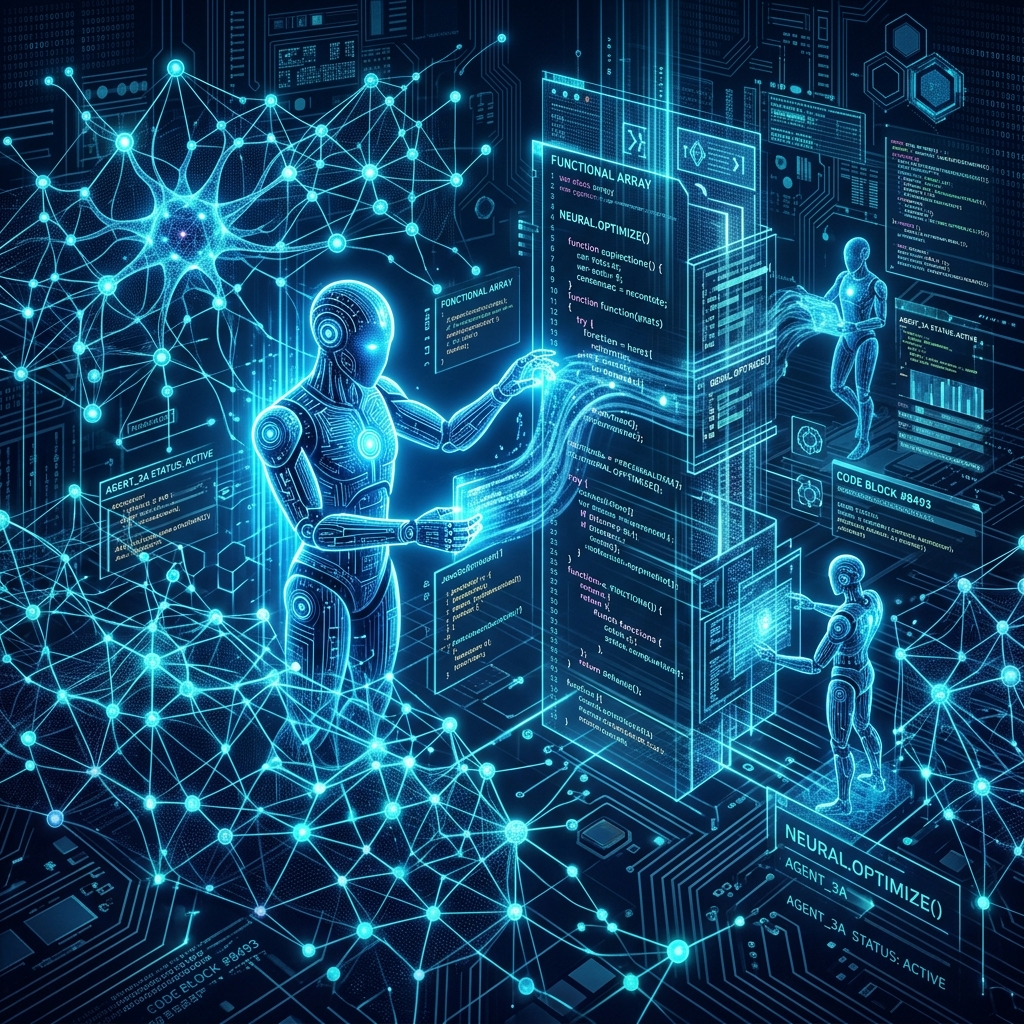
Moving from simple auto-complete to autonomous agents that handle complex engineering tasks and business logic.
The first wave of AI in software engineering was focused on assistance—think auto-complete and documentation lookups. We are now entering the second wave: Orchestration. This involves building systems that don't just suggest code, but actually execute tasks autonomously or semi-autonomously within your production workflows.
Agentic AI requires moving beyond simple LLM prompts. It requires an 'Orchestration Layer' that can manage state, verify outputs, and interact with external tools and APIs. This is where AI moves from being a 'chatbot' to being a 'coworker'.
At Devsort, we've been building 'Human-in-the-loop' systems. These are AI agents that perform the heavy lifting of a task—like analyzing a legacy codebase to find security flaws—but pause and request human validation before executing a fix. This balances the speed of AI with the precision and accountability of expert human oversight.
The architectural requirements for production-grade AI are significant. We implement 'Guardrails' to ensure that LLM outputs remain within deterministic boundaries. This involves using validation models that check the primary agent's output for safety, correctness, and adherence to specific formatting requirements like JSON or code snippets.
We address the latency and cost challenges of AI agents. A complex agentic chain might require dozens of LLM calls. We optimize this by using smaller, specialized models for simple tasks and reserved instances of large models for high-reasoning tasks. We also implement aggressive caching of common AI responses to reduce both time and expense.
Vector databases like Pinecone or Weaviate are essential for providing agents with 'Long-Term Memory'. By storing documentation, codebase abstracts, and past decision logs in a vector store, we can give an agent the context it needs to provide relevant and accurate results without the need for massive context windows in every prompt.
We explore the role of 'Fine-Tuning' vs 'RAG' (Retrieval-Augmented Generation). While RAG provides the easiest way to give an agent current knowledge, fine-tuning allows the agent to internalize specific coding styles, internal libraries, and business logic patterns. We often use a hybrid approach to maximize the agent's effectiveness.
Observability for AI is a new discipline. We track 'Token Usage', 'Hallucination Rates', and 'Success Correlation'. By monitoring these metrics, we can iterate on our prompts and agentic logic to ensure the system is continuously improving over time.
The cultural impact of Agentic AI on engineering teams is profound. It shifts the role of the engineer from a 'writer' to an 'editor' and 'orchestrator'. We focus on training technical leads on how to manage these digital teammates, ensuring that AI is used as a force multiplier for productivity, not a replacement for talent.
In conclusion, orchestrating Agentic AI in production is about building a robust framework for autonomous intelligence. By focusing on safety, context, and observability, we are building the future of high-velocity engineering.